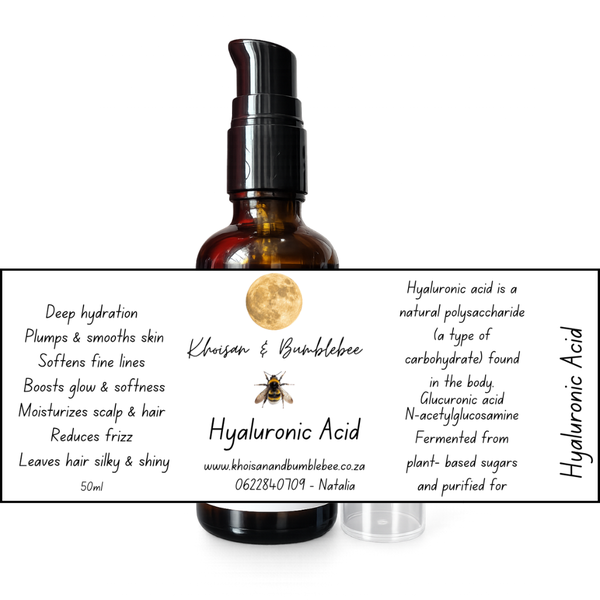
Hyaluronic Acid Serum
Hyaluronic Acid
Hyaluronic acid is a naturally occurring molecule found throughout the body, especially in the skin, eyes, and connective tissue. Its primary role is to retain moisture — with the ability to hold up to six liters of water per gram. This exceptional water-binding power makes it one of skincare’s most effective hydrators, helping the skin appear plump, smooth, and refreshed.
As we age, the skin’s natural hyaluronic acid levels decline, leading to dryness, loss of elasticity, and the appearance of fine lines. Applying hyaluronic acid topically helps replenish hydration, support the skin barrier, and restore a healthy, youthful glow.
Benefits of Hyaluronic Acid for Skin
Deeply hydrates and locks in moisture
Plumps the skin for a softer, smoother appearance
Helps reduce the visibility of fine lines and wrinkles
Improves skin elasticity and firmness
Supports a healthy skin barrier against environmental stressors
Balances oil production and helps reduce clogged pores
Smooths rough texture and improves overall skin feel
Supports skin repair and wound healing
Helps maintain clearer, healthier-looking skin
Assists in improving the appearance of uneven skin tone and hyperpigmentation
Nourishes delicate areas including lips, under-eyes, and cuticles
Suitable for all skin types, hyaluronic acid is a daily essential for maintaining hydrated, radiant, healthy-looking skin.
If your environment is very dry (low humidity), pair hyaluronic acid with an occlusive moisturizer. This prevents HA from drawing water out of your skin when there’s not enough moisture in the air.
When and How Often Should You Apply Hyaluronic Acid?
Frequency: Most people can apply hyaluronic acid twice daily—morning and evening—for optimal results. It is safe for all skin types, including sensitive and acne-prone skin.
However, if you experience irritation, reduce application frequency and consult a dermatologist about the best approach for your unique skin needs.
- After cleansing (skin is still damp)
- Before heavier serums, creams, or oils
- After exfoliating (if using chemical or physical exfoliants)
